How Does Sceye’s Stratospheric Airships Check Greenhouse Gases
1. The Monitoring Gap Could Be Bigger Than People Think
Climate change emissions around the globe are monitored via a range of ground stations and occasional airplane flights, as well as satellites that fly hundreds of miles above the earth’s surface. Each has limitations. Ground stations are scattered and geographically biased towards wealthier countries. Aircraft missions are costly, short-duration, and narrow in their coverage. Satellites can be used to cover the globe but are not able to attain the spatial accuracy required to pinpoint the exact source of emissions — an unreliable pipeline, a landfill releasing methane, or an industrial unit that is not reporting its output. This results in an monitoring system that has serious blind spots at exactly the level where accountability and intervention matter most. Stratospheric platforms are becoming examined as the gaping middle layer.
2. Altitude Creates a Monitoring Advantage Satellites aren’t able to duplicate
There’s an argument based on geometry why 20 kilometres beats 500 kilometres when it comes to monitoring emissions. A sensor operating at a stratospheric elevation can see a ground footprint of several hundred kilometers while still being close enough determine emission sources with sufficient resolution. This includes individual facilities and road corridors as well as agricultural zones, and so on. Satellites scanning the same area from low Earth orbit cover it faster but with fewer granularity and revisit times. A methane vapor that appears and disperses in hours might not even be detected. A platform that is positioned above a region of interest for days or even weeks at a time transforms intermittent snapshots into something closer to continuous surveillance.
3. Methane Is the Most Important Target for a reason.
Carbon dioxide is the primary focus of the media attention, but methane is the greenhouse gases where close-to-term monitoring improvements could bring the most impact. Methane’s effects are significantly greater than CO2 over a period of 20 years and a large portion of methane emissions from humans originate at the point of origin — infrastructure for gas and oil or waste facilities, agricultural processes — that are both detectable and often fixable in the event of identifying. Real-time methane monitoring via a constant stratospheric platform implies operators, regulators, and government agencies can see leaks right as they occur, instead of discovering them months later through annual inventory reconciliations that usually rely on estimates rather than actual measurements.
4. The Sceye Airship’s Design Is Built for the Monitoring Mission
The attributes that make an excellent telecommunications device and an effective environmental monitoring platform have more in common than you believe. Both require endurance for a long time as well as stable positioning and sufficient payload capacity. Sceye’s airship with lighter weight is able to meet all three requirements. Since buoyancy serves the basic job of keeping the aircraft in a safe position it means the power budget isn’t depleted by the production of lift and can be used for propulsion, station keeping and powering any sensor requirements the mission calls for. To monitor greenhouse gas emissions in particular it’s necessary to carry the spectrometer, imaging system, and processing equipment for data processing without the weight limitations that restrict fixed-wing HAPS designs.
5. Station Keeping Is Not a Negotiable Option for Utilizable Environmental Data
A platform that varies in its monitoring is a monitor that generates unintelligible data. Knowing precisely where a sensor was at the time of recording a reading is crucial to assign the data to a source. Sceye’s focus on real station keeping — which is holding a fixed position above a target area through active propulsion it’s not just a technical performance metric. It’s why the data is scientifically supported. Stratospheric earth observations only become valuable for regulatory or legal purposes when the positional record is robust enough to stand up to scrutiny. Drifting balloon platforms no matter how powerful their sensors are, don’t offer that.
6. The same platform can monitor Oil Pollution and Wildfire Risks Simultaneously
One of the most intriguing aspect of the multipayload model is the way in which different environmental monitoring missions work together on similar vehicles. Airships that operate over off-shore or coastal regions can contain sensors geared towards pollutant detection in conjunction with those tracking methane or CO2. On land, the same platform architecture can be used to detect wildfires technology, which can detect heat signatures, smoke plumes, and vegetation stress indicators that precede ignition events. Sceye’s methodology for designing mission is to treat these as not separate programs that require separate aircrafts but as a parallel use case for infrastructure that’s already positioned and operational.
7. The ability to detect Climate Disasters during real time changes the Response Equation
There’s a difference in knowing that a wildfire began within six hours and being aware that it began just twenty minutes earlier. Similar is true for industrial accidents that release poisonous gases, flood events risking infrastructure, or unexpected methane emissions from permafrost. The ability to identify climate disasters and their causes in real the time of a persistent stratospheric platform provides emergency managers in government agencies, industrialists a window of opportunity to intervene which doesn’t happen when monitoring is based on earth-based reports. The value of that window increases when you realize that the early phases of the majority of environmental emergencies are crucial to intervene in when intervention is most efficient.
8. Its Energy Architecture Makes Long Endurance Monitoring Possible
Environmental monitoring missions are only able to provide their full value if platforms remain on station long enough for the creation of a meaningful data record. A week’s worth of methane readings in an oil field will tell you something. A continuous stream of data for months tells you something that is genuinely useful. The ability to sustain that endurance is dependent on solving the problem of night-time energy -it is the responsibility of the platform to maintain enough power throughout daytime to allow for all systems through the evening without affecting their position or the operation of sensors. Improvements in lithium-sulfur battery technology which have energy densities of approximately 425 Wh/kg, combined with an improvement in solar cell efficiency create a closed power loop feasible. In the absence of both these, durability remains simply an aspiration, rather than an objective.
9. Mikkel Vestergaard’s Biographical Background Explains The Environment-related Focus
It is important to understand why a company that is a stratospheric aerospace puts such a visible emphasis on greenhouse gas monitoring and disaster prevention rather than focusing on connectivity revenue. Mikkel Vestergaard’s experience in applying technology in large-scale environmental and humanitarian concerns gives Sceye an initial focus that is reflected in the goals that Sceye prioritises and the way it explains its platform’s primary function. The capabilities for monitoring the environment don’t serve as a second payload to bolt onto a telecoms vehicle look more socially conscious. They express a real belief that the stratospheric system should be conducting climate work, and this platform is able to handle both without compromising.
10. The Data Pipeline Is as Important as the Sensor
Gathering data on greenhouse gas emissions from the stratosphere is just half the matter. getting that information to people who need it in a format that they can act on, in something almost real time is the other half. A stratospheric system with onboard processing capabilities and direct connection to ground stations can compress the time between detection and decision considerably compared to systems that batch data to be later analyzed. For natural resource management systems like regulatory compliance monitoring or emergency response, the timing of the data is often along with its accuracy. Integrating the data pipeline in your platform’s framework from the start, rather than considering it as an afterthought is a key element that separates serious stratospheric earth observation from unproven sensor campaigns. Read the top Sceye Wireless connectivity for site examples including sceye greenhouse gas monitoring, japan nation-wide network of softbank corp, detecting climate disasters in real time, what are high-altitude platform stations haps definition, sceye haps airship specifications payload endurance, Sceye Softbank, Stratospheric telecom antenna, sceye haps project status, High altitude platform station, whats haps and more.
Sceye’s Solar-Powered Airships Provide 5g In Remote Regions
1. The Connectivity Gap Is a Infrastructure Economics problem first.
About 2.6 billion people have no reliable internet connectivity, and there is rarely due to a lack of technology. It’s an absence of economic justification for deploying that technology in areas where density is not sufficient and the terrain isn’t suitable or the political climate is too uncertain to justify the traditional return on infrastructure investment. Building mobile towers across mountains, archipelagos or arid interior regions or in remote island chains cost real money against revenue projections that don’t justify the idea. This is why the gap in connectivity continues to exist with no end in sight and despite years of genuine goodwill. The reason isn’t lack of awareness or desire but rather the economics of terrestrial expansion in areas that don’t conform to the normal infrastructure strategy.
2. Solar-Powered Airships Change the Way We Deploy Economics
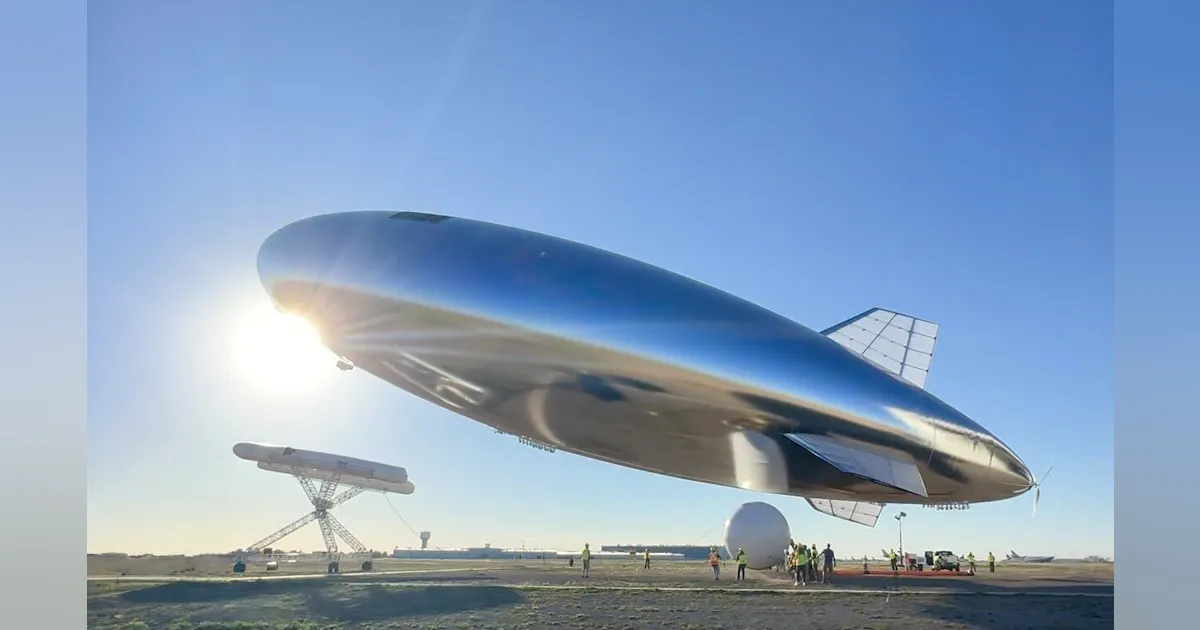
A stratospheric airship that functions as an antenna for cell phones at the top of the sky alters prices of wireless connectivity in ways that can be considered in the real world. One platform at 20 kilometres altitude covers the ground and could require hundreds of terrestrial towers to replicate, but without civil engineering, land acquisition, power infrastructure, and ongoing maintenance that ground-based deployment demands. Solar power removes fuel logistics completely — the platform generates its energy through sunlight and stores it in high density batteries to run for a long period of time, and keeps its job going without supply chains that reach into remote areas. For areas where the obstacle to connectivity is in fact the difficulty and cost of physical infrastructure It’s a very different idea.
3. The 5G Compatibility question is More Important Than It Sounds
A satellite-based broadband service is only commercially useful if it connects to devices users actually own. Early satellite internet systems required the use of special equipment that was expensive massive, cumbersome, and unsuitable to mass-market acceptance. The development of HIBS technology High-Altitude Inductive Base Station standards has changed this by making stratospheric technologies compatible with same 5G and 4G protocols that standard smartphones currently use. A Sceye airship serving as a stratospheric antenna for telecom can, in principle, support mobile devices from a standard smartphone without having any additional hardware installed on the device’s end. Its compatibility with current device ecosystems is the difference between a solution for connectivity which reaches everyone who is in the reach area, and one which is restricted to those that can spend the money for specialized equipment.
4. Beamforming Transforms a Large Footprint Into Efficient Targeted Coverage
The area of coverage that is raw for the stratospheric layer is enormous However, the extent of coverage and useful capacity are different things. Broadcasting out a single signal over a 300-kilometer diameter makes use of the vast majority of spectrum in uninhabited terrains, open water, and in areas which have no active users. Beamforming technology permits the stratospheric antenna for telecom to focus energy in a dynamic manner towards locations where the demand is actually therethe fishing community on an area of the coastline as well as an agricultural area in a different, a city facing a disaster in third. This intelligent system of managing signals enhances spectral efficiency. This translates directly into the capacity available to actual users rather than the theoretical coverage limit the platform can illuminate should it broadcast in an indiscriminate manner.
5G backhaul-related applications benefit by the same strategysending high-capacity link connections precisely to the infrastructure nodes below that require them instead of spraying capacity across a wide area.
5. Sceye’s Airship Design Maximises the Payload Available for Telecoms Hardware
The telecoms equipment on an stratospheric vehicle — antenna arrays signal processing systems, beamforming hardware power management systemsactually weighs a lot and has a significant volume. A vehicle that is spending the bulk of its structural and energy budget just staying in air has little left over for meaningful telecoms equipment. Sceye’s lighter than air design addresses this directly. Buoyancy drives the vehicle without an ongoing energy cost for lifting, meaning that the available structure and power could support a telecoms payload substantial enough to supply commercially-useful capacity, not just a small signal that is spread over a huge space. The airship’s architecture isn’t secondary to the connectivity mission- it’s what makes carrying a large telecoms payload alongside other mission equipment simultaneously practical.
6. The Diurnal Cycle governs whether the Service is Intermittent or Continuous.
A connectivity service that runs during daylight, and shuts down at night isn’t an actual connectivity solution — it’s an example. If Sceye’s solar-powered Airships are to offer the kind of constant services that distant communities, emergency personnel, and commercial operators depend on, the platform must solve the overnight energy equation effectively and consistently. The diurnal cycle — generating sufficient solar energy in daylight to power all systems and enough charge for batteries to remain operational until next sunrise the governing engineering restriction. Advances in lithium-sulfur battery energy density, which is now approaching 425 Wh/kg, as well as improving the efficiency of solar cells on stratospheric aircraft are the main factors in closing this loop. Without both durability and continuity, both remain conceptual rather than operational.
7. Remote Connectivity has a multiplier effect on Social and Economic Effects
The case for connecting remote regions isn’t purely humanitarian in the sense of abstract. It allows for telemedicine which can reduce the costs of healthcare delivery to areas without nearby hospitals. It allows for distance education which doesn’t require the building of schools in every dispersed community. It also allows financial services access which replaces cash-dependent economics with the efficiency that digital transactional transactions offer. It enables early warning systems for storms and natural disasters. They can reach areas most affected. Each of these benefits will increase with time as communities develop digital literacy and their economies become more reliant on reliable connectivity. The process of deploying the stratospheric internet to offer coverage to remote areas isn’t providing a luxury — it’s providing infrastructure, which has downstream consequences across health, education, safety and economic participation at the same time.
8. Japan’s HAPS Network Shows What a National-Scale deployment looks like
The SoftBank cooperation with Sceye targeting the pre-commercialization of HAPS applications in Japan in 2026 is important partly because of its scale. Nation-wide networks require multiple platforms offering continuous and interconnected coverage throughout a country whose geography — thousands of islands and mountains interior, and long coastlines- creates exactly the kind of coverage issues that stratospheric connectivity was designed to solve. Japan is also a sophisticated technological and regulatory system where the operational challenges associated with managing stratospheric networks at a national scale are expected to be confronted and resolved in a way that yields lessons for each subsequent deployment elsewhere. What works over Japan will guide what works over Indonesia or in the Philippines, Canada, and any other country that shares similar geographical and coverage goals.
9. The founder’s perspective shapes how the Connectivity Mission Is Conceived
Mikkel Vestergaard’s principle of founding at Sceye views connectivity as not a business product that happens to reach remote areas but as infrastructure with a social obligation that is attached to it. This framework determines which types of deployments the company will prioritize in its partnership strategy, the kind of partnerships it pursues and the way it communicates the goals of its platforms to investors, regulators, and prospective operators. The emphasis on remote regions as well as communities with limited access to services and disaster-resistant connectivity is an indication of the stratospheric layer constructed should help the populations who aren’t served by infrastructure. This is not an idea of charity but as a core essential requirement for design. Sustainable aerospace innovation in Sceye’s terms, is the creation of something that fills in the gaps rather than improving the services for populations already well covered.
10. The Stratospheric Connectivity Layer is Beginning To Look Like It’s Almost Certain
For a long time, HAPS connectivity existed primarily in the form of a concept that attracted investment and resulted in demonstration flights. However, it was not producing commercial services. The combination and evolution of battery chemistry, increasing efficient solar cells HIBS standards that enable device compatibility, as well as committed commercial partnerships has altered the direction. Sceye’s solar-powered airships are the convergence of these enabling technologies at a period when the demand side — remote connectivity and disaster resilience, as well as 5G’s future expansion — has never been more clearly defined. The stratospheric layer between satellites orbiting earth and terrestrial networks isn’t slowly filling around the edges. It’s being constructed deliberately, with specific areas of coverage, precise technical specifications, and specific commercial timelines linked to it. Take a look at the best Stratospheric missions for more info including softbank investment sceye, what does haps stand for, sceye haps airship payload capacity, Sceye HAPS, softbank sceye partnership haps, softbank haps pre-commercial services 2026 japan, Real-time methane monitoring, what are the haps, Sceye Founder, SoftBank investments and more.